
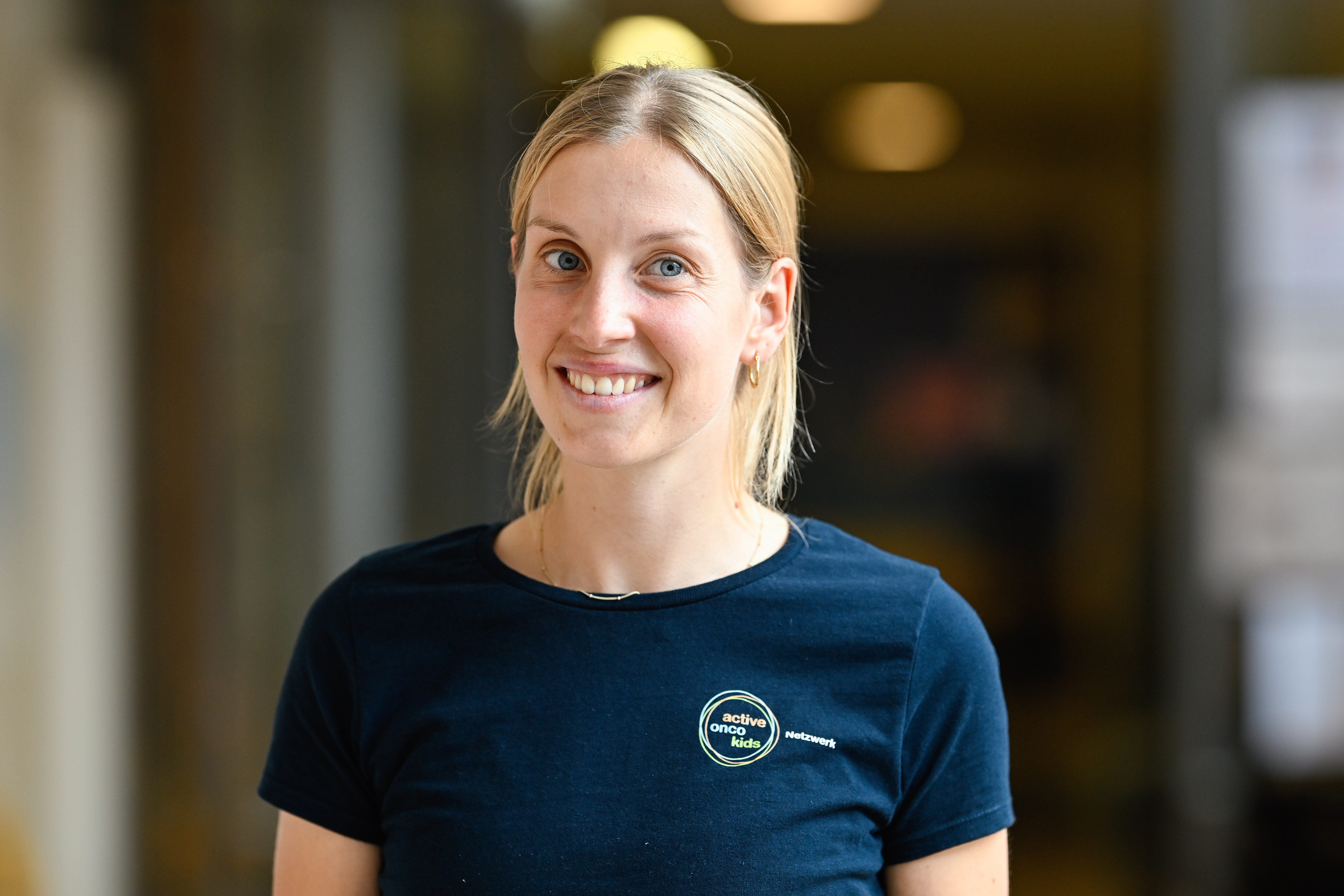
Since 2020, I have been working as a sports therapist at the Center for Pediatric and Adolescent Medicine at UKHD as well as at KiTZ, helping children and adolescents with cancer stay physically active both during and after cancer treatment. For many of these children and adolescents, physical activity represents a part of their daily lives, a sense of freedom, and a joy for life. At the same time, it can help counteract treatment-related limitations and potential long-term effects such as obesity, osteoporosis, or metabolic disorders, while also supporting physical development. What’s possible and appropriate varies from child to child and from day to day. That’s why I always take an individualized approach: What’s possible today, and what feels good right now? Sometimes that means a full workout; other times, it’s just a few steps down the ward hallway. I’ve found that it’s not just about strength, endurance, and flexibility. When children and adolescents realize what’s still possible despite their illness and treatment, it can give them courage, boost their self-confidence, and restore a sense of self-determination. I saw this particularly clearly with Tim*.
Tim is 17 years old and an avid basketball player when he comes to KiTZ in 2021 for cancer treatment. I quickly hit it off with Tim, because exercise is a natural part of his daily routine at the hospital. Whenever he’s at the hospital for chemotherapy, we’d make plans—depending on how he was feeling that day—to do strength training with small equipment in the gym or take walks down the ward hallway. After his treatment ends, Tim can return to school and basketball practice. At the same time, it becomes clear that the intensive treatments have, unfortunately, damaged his joints.
In the middle of his high school graduation exams, Tim is readmitted to the hospital due to a relapse of his illness. The treatment is more intensive than last time and takes a heavy toll on his body. Still, Tim wants to keep exercising. So every day, we figure out together what’s possible in his small isolation room: marching in place, wall push-ups, or riding the stationary bike while looking out the window. Sometimes we can do very little; other times, a bit more. What never ceases to impress me is that Tim keeps at it, no matter how bad he feels. Shortly afterward, serious complications temporarily confine him to a wheelchair. With the support of his parents, we shift his training to the weight room, using equipment to help him regain his strength. And Tim doesn’t give up. He fought his way out of the wheelchair. First steps, first flights of stairs, first bike rides. His progress motivates him and gives him strength, even though he has to endure repeated surgeries and rehabilitation sessions.
Today, he’s in college and living independently. He still works out in the weight room as part of a group program for young adults with cancer and has since taken up wheelchair basketball. He helps decide his own training plan and has long since figured out what works best for him. When I look back today on the time I spent with Tim, accompanying him through the very different phases of his illness is something special to me. His story shows very clearly that sports therapy can be so much more than just “building muscle.”
*The child's name has been changed to protect his or her privacy.
It’s not just sports therapist Franziska Olivier who talks about their work together: KiTZ patient Tim* also shares his own perspective on the role sports therapy plays in his life.