New insights and therapeutic approaches

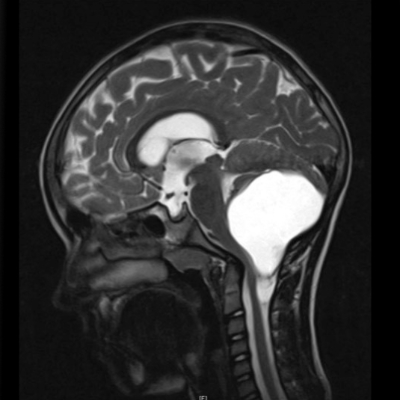
Brain tumors and other tumors of the central nervous system (CNS) are the second most common cancer in childhood, accounting for about 24 percent of all cases, and simultaneously the most frequent group of "solid" (i.e., solid, initially spatially limited) tumors.

With regard to trials, we distinguish between clinical trials, diagnostic platforms and registry studies. Clinical trials mean that a new treatment is being tested for efficacy and tolerability among other things. Diagnostic platforms offer molecular analyses of tumor material, while registry studies are observational studies in which data is collected during course of the disease.

You can find an overview of all our clinical studies, as well as our diagnostic platforms and registry studies on solid and brain tumors here below. Additionally, there is an overview of the diagnostic options to facilitate allocation.



Clinical Trials

Green indicates trials for which recruitment is still open. Red, on the other hand, are those for which recruitment has been completed. Diagnostic platforms and registry studies follow, as does our overview of diagnostic options.

EPILOGUE

An exploratory, multicenter, international, open-label, Phase I/II umbrella study of pLGG that employs an intra-individual dose-escalation strategy to determine the optimal tolerated dose for each patient across the various (combination) treatment arms.


Larotrectinib CONNECT 1903

This is a Phase I pilot study that will evaluate disease status in children that have been newly diagnosed high-grade glioma with TRK fusion.


ONC201-108 ACTION

This is a randomized, double-blind, placebo-controlled, parallel-group, international, Phase 3 study in patients with newly diagnosed H3 K27M-mutant diffuse glioma to assess whether treatment with ONC201 following frontline radiotherapy will extend overall survival and progression-free survival in this population. 

PAMSARC (HEROES-AYA I)

Pasireotide inhibits growth and is approved for the treatment of Cushing's disease and acromegaly. The PAMSARC study is evaluating the drug outside its originally intended and approved indications.

FIREFLY-1

Pan-RAF inhibitor DAY101 in BRAF-modified, relapsed or progressive LGGs.


Entrectinib

An open-label, dose-escalation, expansion phase I/II study of entrectinib in children with advanced or metastatic solid tumors or primary central nervous system tumors with/or without sufficient treatment options.


LOGGIC/FIREFLY-2

A Phase 3, Randomized, International Multicenter Trial of DAY101 Monotherapy Versus Standard of Care Chemotherapy in Patients With Pediatric Low-Grade Glioma Harboring an Activating RAF Alteration Requiring First-Line Systemic Therapy.


Diagnostic options

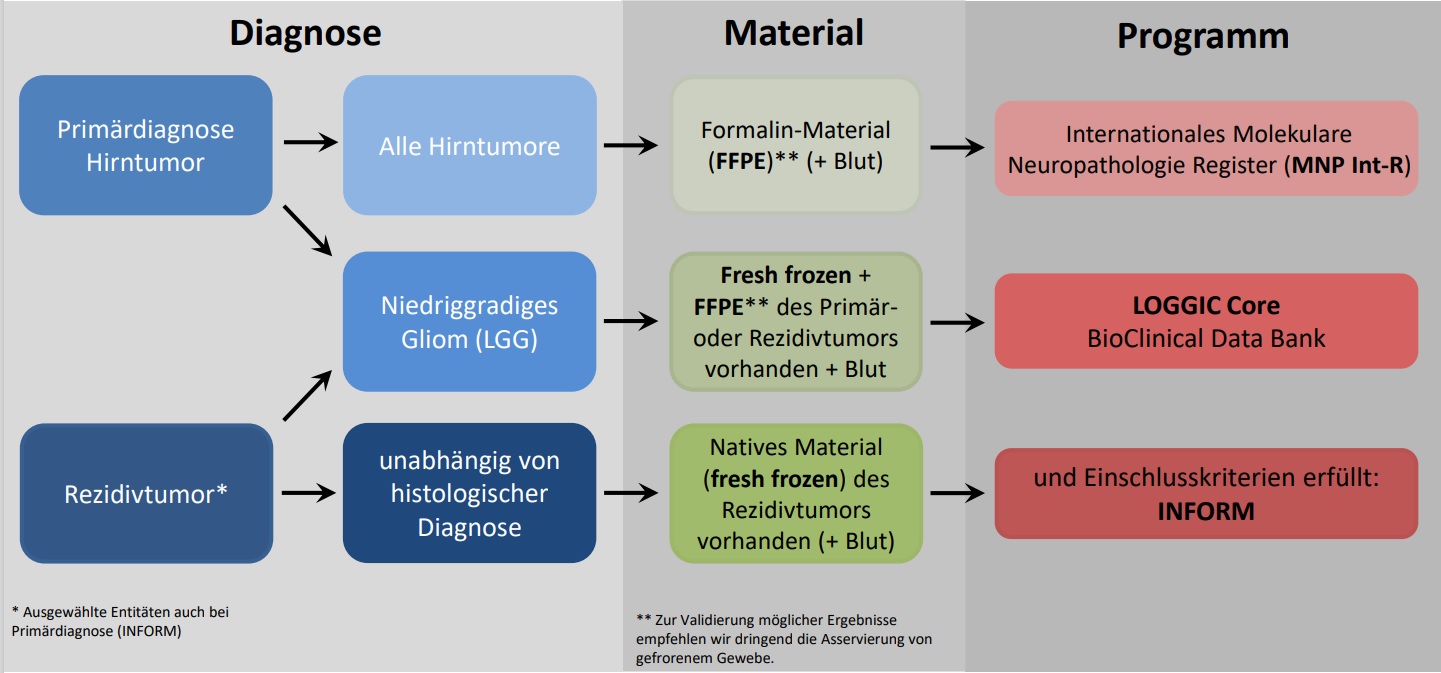
Which program is suitable for which patient? To provide some clarity here, we have created a flowchart. If you have any questions or need additional information, you can find contact information on the respective program pages.


Diagnostic platforms and registry studies

Here are our diagnostic platforms and registry studies. Clinical trials have been listed above.


INFORM

INdividualized therapy FOr high-Risk childhood Malignancies: a unique multi-country genome sequencing program for children with cancer in Europe.


MNP Int R

The current MNP Int-R follow-up registry study aims to establish an international registry for the generation and coordination of molecular data in pediatric neuro-oncology.


LOGGIC Core

The LOGGIC Core BioClinical database (LOGGIC Core) is a registry of molecular and clinical data for pediatric low-grade gliomas (LGG).