The "Hopp Children's Cancer Center Heidelberg" (KiTZ) is a joint institution of the German Cancer Research Center (DKFZ), Heidelberg University Hospital (UKHD), and Heidelberg University (Uni HD).
The program, coordinated by Institut Curie, is funded with a total of approximately 13.2 million euros through the Horizon Europe framework program and the European Science Foundation’s “Fight Kids Cancer” research funding program. In addition to Hopp Children’s Cancer Center Heidelberg (KITZ), the Heidelberg Medical Faculty at Heidelberg University, Institut Curie in Paris, and Prinses Máxima Centrum in Utrecht, the Netherlands, other participants include the Institut Gustave Roussy, Ghent University Hospital, Ghent University, and the organization Childhood Cancer International Europe.
Ewing sarcoma is the second most common bone tumor in adolescents and young adults. Treatment options have changed very little over the past 25 years. The standard of care to date has been a combination of chemotherapy, radiation therapy, and surgery. However, treatment outcomes are often insufficient, particularly in aggressive forms of the disease.
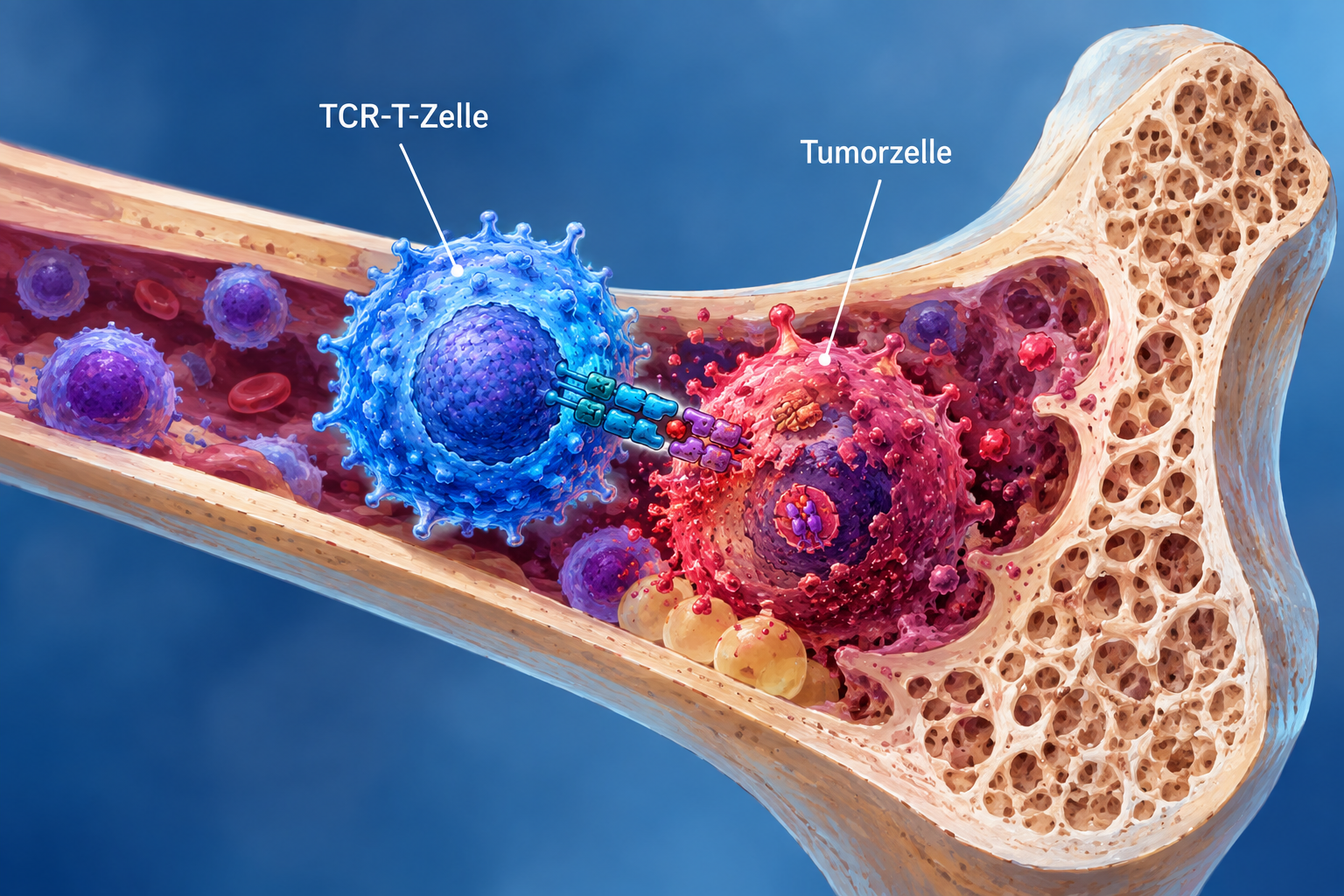
THEODORA comprises two key projects: The first project component, focusing on immunotherapy, will begin in September 2026 and is funded with 8.7 million euros through the EU’s Horizon Research and Innovation Action (RIA) program. The goal is to prepare for an initial clinical trial that will investigate specific immune cells — known as TCR-T cells — targeted at a specific site in Ewing sarcoma. The advantage of such TCR-T cells is that they also recognize target structures located inside the cancer cells. The first clinical trials are scheduled to begin in 2028.
At KiTZ, in addition to treating patients, comprehensive biomarker analysis and therapy monitoring of these immunotherapies will play an important role. By combining immune cell analyses with liquid biopsies of tumor DNA in the blood, researchers aim to track tumor and the immune system response to the new treatment as accurately as possible.
“This enables us to monitor the course of the disease in real time and understand how individual patients respond to treatment. By combining the monitoring of immune cells with liquid biopsies, THEODORA can help advance precision medicine for young people with sarcomas and make it even more effective,” says Christian Seitz, Medical Director of the ‘Stem Cell Transplantation, Cell and Gene Therapy’ at Hopp Children’s Cancer Center Heidelberg (KiTZ) and the Department of Pediatric Oncology, Hematology, Immunology, and Pulmonology at Heidelberg University Hospital (UKHD), as well as scientists from the Heidelberg Medical Faculty at Heidelberg University and the German Cancer Research Center (DKFZ).
Prinses Máxima Centrum is responsible, among other things, for the production of TCR-T cells and also contributes its expertise in the field of Patient-Reported Outcome Measures (PROMs). These include standardized instruments and questionnaires which patients use to subjectively report on their health status, symptoms, and well-being. In addition to assessing the treatment’s medical efficacy, the study aims to examine how the therapy affects the quality of life of these young patients.
In recent years, researchers at Institut Curie, in collaboration with scientists at KiTZ, have identified new, tumor-specific molecules known as ‘neogens’. These arise from genetic changes in tumor cells that are characteristic of Ewing sarcoma and open up new possibilities for targeted immunotherapies. Such neogens have been detected not only in Ewing sarcoma but also in other sarcomas affecting children and adolescents. Building on these findings, the THEODORA project now aims to establish a Europe-wide master protocol for early-phase clinical trials in Ewing sarcoma, which will enable innovative immunotherapies for children to be clinically tested more efficiently.
A second phase of the project, THEODORA-B, will begin in 2027. An additional 4.5 million euros has been allocated for this phase through the European Science Foundation’s “Fight Kids Cancer” funding program. The project will investigate a ready-to-use therapeutic mRNA vaccine whose sequence includes several neoantigens characteristic of Ewing sarcoma. The vaccine is being developed by Ghent University and Ghent University Hospital in close collaboration with Institut Curie and other project partners. The goal is to train the immune systems of affected patients in such a way that relapse can be prevented in high-risk patients.
“This large-scale European project aims to help develop more precise and effective treatments for this rare and aggressive tumor more quickly, and offers new hope to young patients with Ewing sarcomas,” emphasizes Amaury Leruste, a pediatric oncologist and researcher at Institut Curie and director of the THEODORA project.