
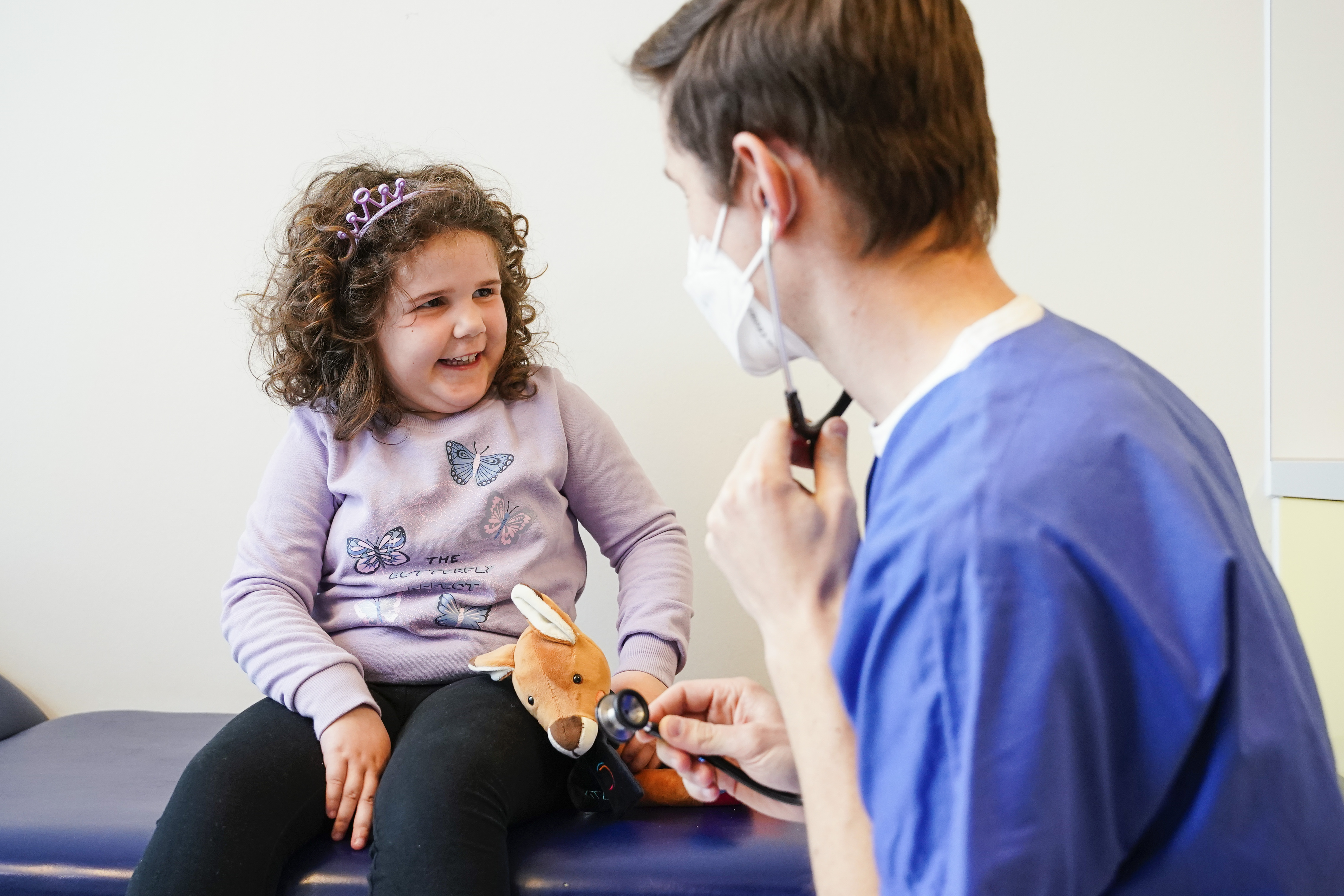
Enna was just three years old when she received the devastating diagnosis of “brain tumor.” It was a dramatic turning point in the lives of Enna and her family. Enna first underwent chemotherapy, and then the tumor was surgically removed from her head. But eventually, the cancer returned.
Like Enna, about 20 percent of all children and adolescents with cancer experience a relapse. They are particularly at risk because their cancer cells are often already resistant—that is, unresponsive—to standard treatments such as chemotherapy and radiation therapy. In such cases, the chances of a cure are poor. Modern treatment methods such as immunotherapies and targeted therapies, which attack very specific molecular and genetic vulnerabilities of the cancer cells, could help. “To assess which of these specific therapies might be effective, comprehensive molecular genetic diagnostics and counseling are necessary,” explains David Jones, research group leader at KiTZ and DKFZ. Jones is also the coordinator of INFORM, a study program specifically for children whose cancer returns or continues to progress after treatment.
In the event of a relapse, the chances of recovery decrease significantly
Enna was then also enrolled in the INFORM program. And the team at the Hopp Children’s Cancer Center (KiTZ) in Heidelberg was able to use state-of-the-art molecular analysis techniques to scan the genome of Enna’s tumor for specific targets. The analytical method was developed by Stefan Pfister, a Leibniz Prize laureate and one of the three directors of KiTZ, in collaboration with colleagues at DKFZ.
New diagnostic tools reveal vulnerabilities
A short time later, the good news: Enna’s tumor has an Achilles’ heel—a kind of weak spot where the cancer can be targeted therapeutically, because an approved therapeutic agent acts precisely on that spot. Enna now receives this drug in the form of a juice in the morning and evening: “It doesn’t taste good,” is the verdict of the now six-year-old. She points her thumb toward the floor. The juice may not taste good, but it seems to be working. This became evident a few months later during an MRI follow-up, which showed a reduction in the tumor’s size.
It is not yet clear whether Enna can be completely cured with the medication. But the initial visible successes of the treatment give Enna and her family reason for hope. And the personalized therapy, which has few side effects—and involves no chemotherapy or radiation at all—gives the girl a significantly better quality of life.
Until now, molecular cancer diagnostics for children and adolescents have been made possible solely through project funding and private donations. However, the German Cancer Research Center (DKFZ) and Heidelberg University Hospital (UKHD), the mother institutions of KiTZ, recently signed contracts with a total of 55 statutory health insurance providers. These providers now cover the costs of tumor analysis through the INFORM program for children and adolescents with cancer who are insured by them and who have experienced a relapse or have a high-risk condition.