The Hopp Children’s Cancer Center Heidelberg (KiTZ) is a joint institution of the German Cancer Research Center (DKFZ), Heidelberg University Hospital (UKHD) and the University of Heidelberg (Uni HD).
A diagnosis of cancer in children and adolescents can turn an entire family’s life upside down. Questions arise suddenly: How will treatment proceed? What side effects can be expected? What can we do to support our child and our family? Where can we find help?
The new video series aims to offer clear answers and ongoing support. Produced jointly by the Hopp Children’s Cancer Center Heidelberg (KiTZ) and the German TV host and physician Dr. Johannes Wimmer, the videos cover all fundamentals of childhood cancer, established treatment methods and emerging therapies. They also include practical advice on care topics such as nutrition, management of side effects, as well as videos on preservation of fertility, palliative care and psychosocial support for the entire family.
Some episodes are specifically designed for primary school-aged children, explaining the disease in an age-appropriate and accessible way. Some videos on topics such as sexuality and cancer and sports therapy are specifically for adolescents.
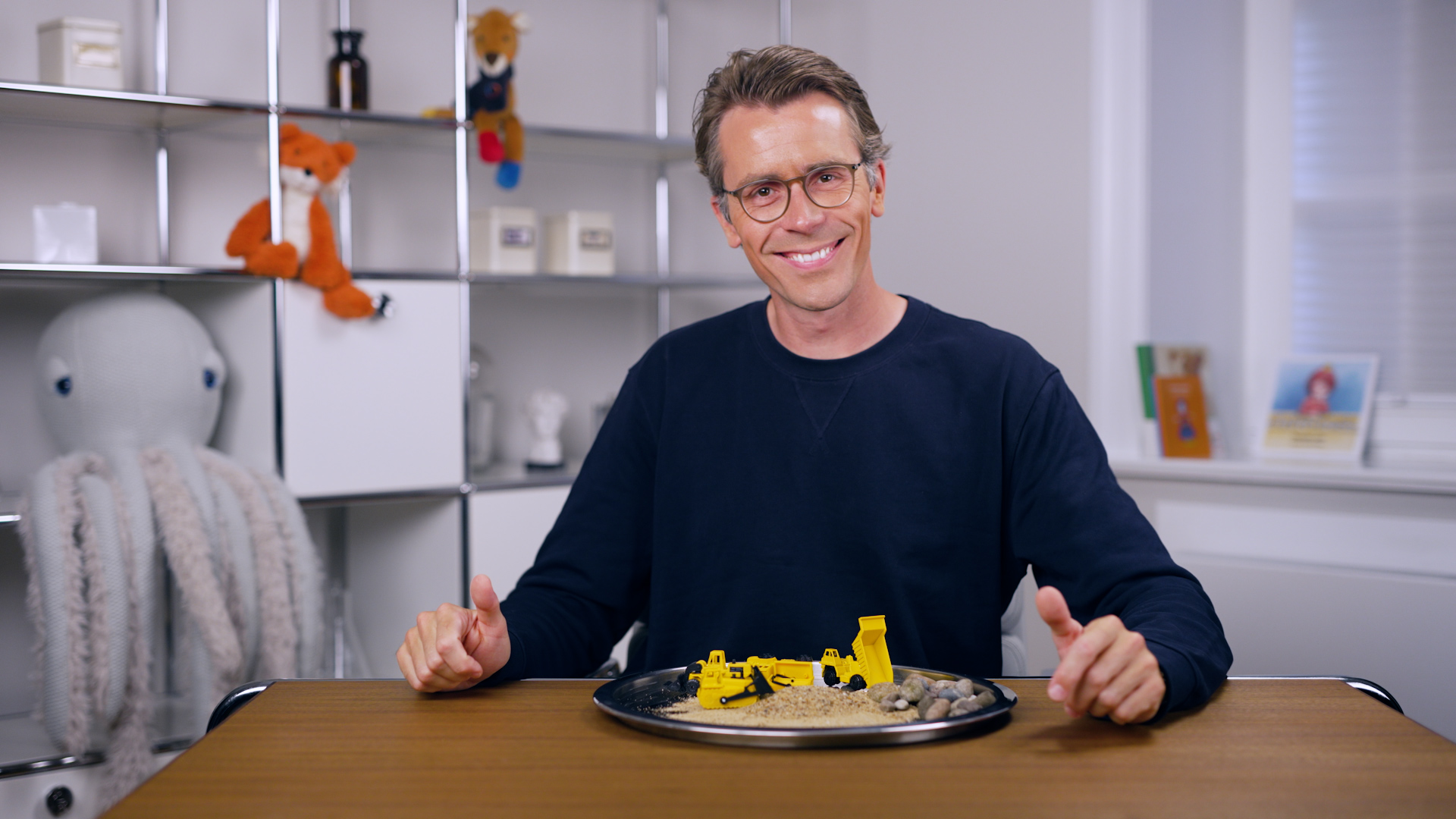
Dr. Johannes Wimmer, who lost his eight-month-old daughter to cancer in 2020, hosts all German videos himself. The project is particularly close to his heart: “Even as a physician, I remember how difficult it was at times to absorb and process all the information and make decisions. I often wished for a ‘replay button’ to go through everything again when I was ready,” Wimmer explains. “In these videos, we present complex medical information in clear, accessible language and focus on the most important points, while maintaining a hopeful tone.” In videos for children, Wimmer uses playful elements such as sweets, toy excavators, and a puppet named “Toni” to explain concepts in a child-friendly way.
Originally produced in German, all videos have now also been translated into English using latest AI avatar technology and were released on the KiTZ YouTube channel. This initiative represents the first comprehensive video guide dedicated to childhood and adolescent cancer. It is the result of close collaboration among a multidisciplinary team of specialists from KiTZ and its mother institutions: Heidelberg University Hospital (UKHD), the German Cancer Research Center (DKFZ), and Heidelberg University.
The video series was made possible through funding from the German Childhood Cancer Foundation and prize money awarded by the French Association for Cancer Research (ARC) to KiTZ Director Stefan Pfister for his outstanding work in childhood cancer research.
Pfister comments: “We are very pleased that this video guide is now also available to international patients and their families at any time. I would like to extend my sincere thanks, in particular to the German Childhood Cancer Foundation for making this project possible, as well as to Dr. Johannes Wimmer and his team for their extraordinary commitment and dedication. I would also like to thank our nursing staff, physicians, psychosocial teams, the Cancer Information Service at DKFZ, as well as our researchers and our communications team for their tremendous dedication and the many hours they have invested in this project.”
The videos are available on the following channels: